In service
Liberandum
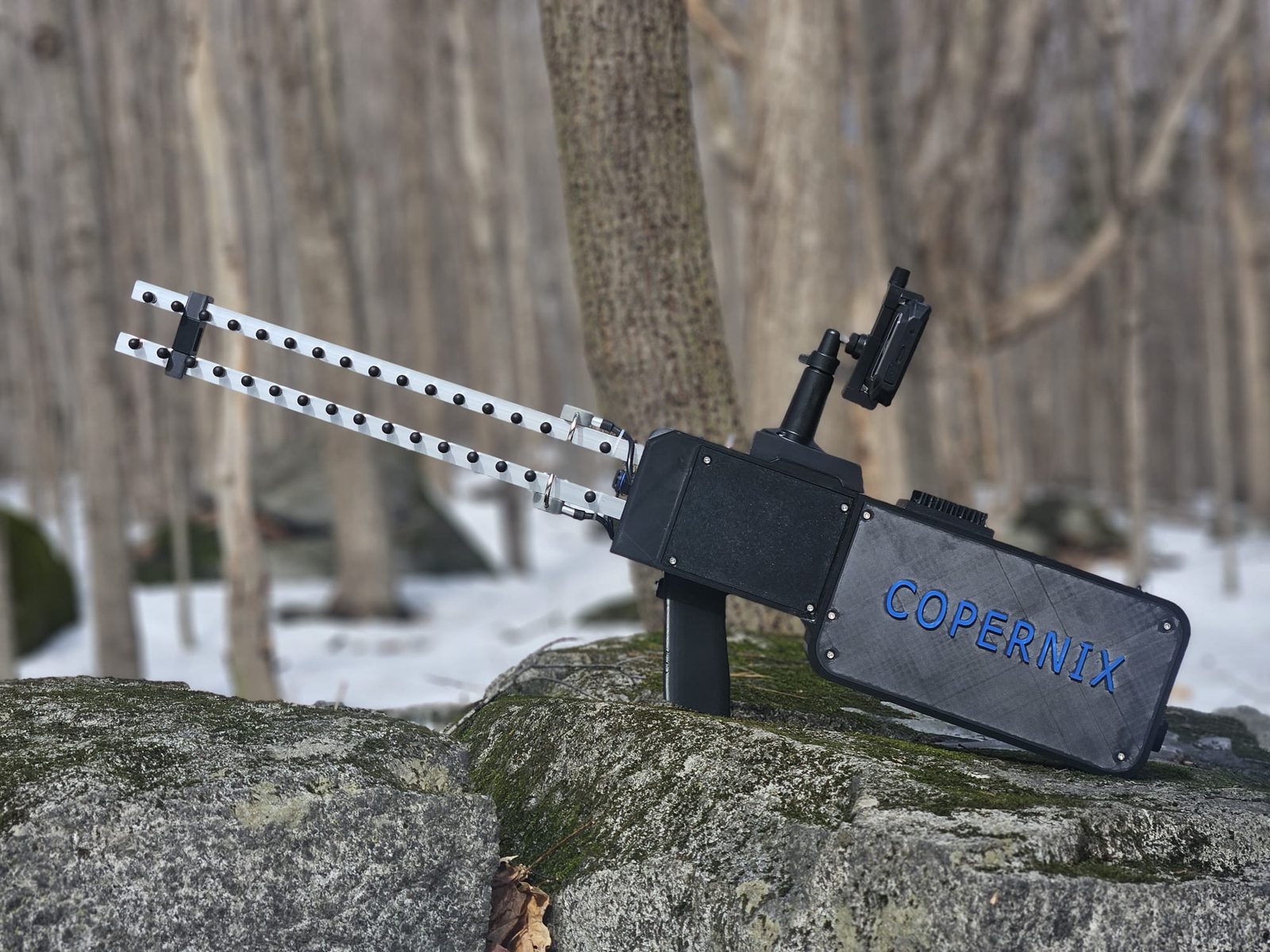
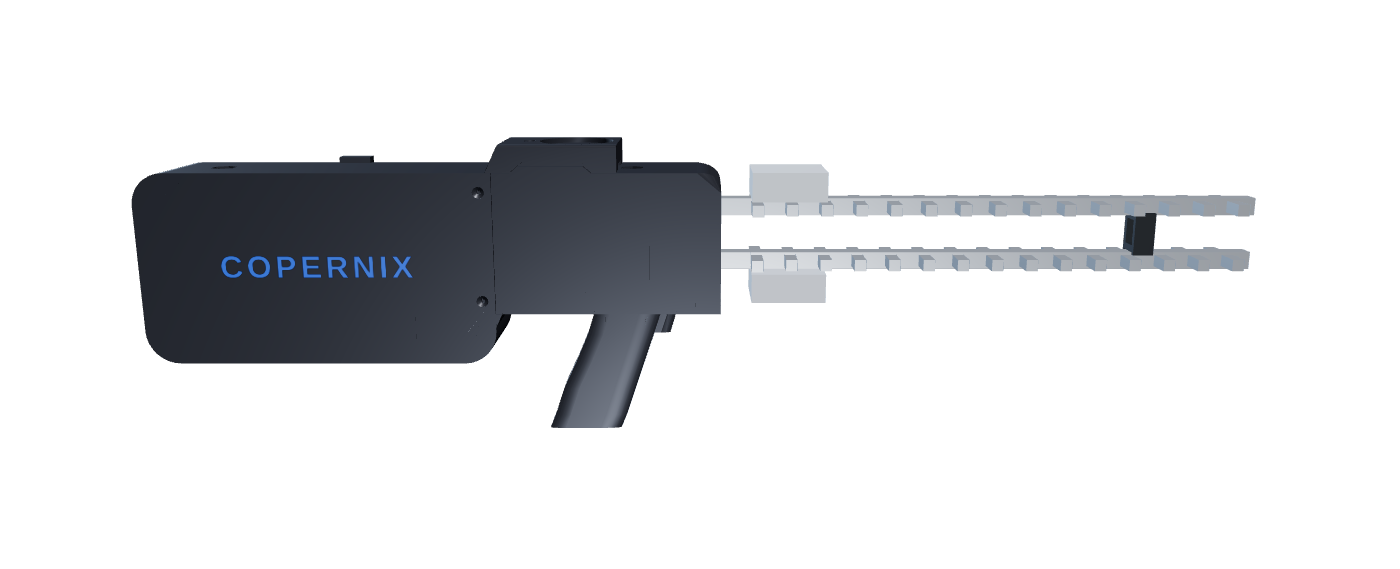
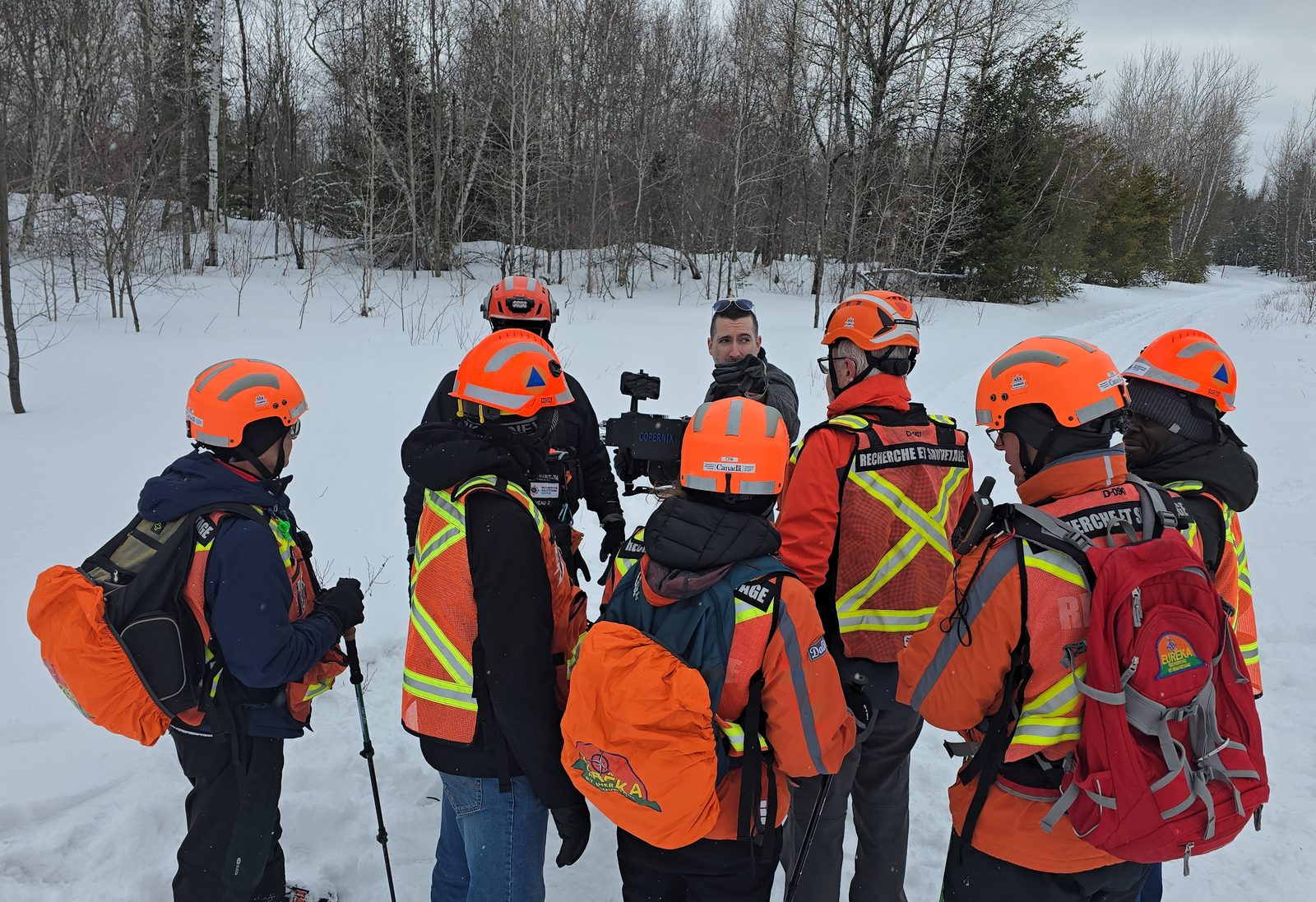
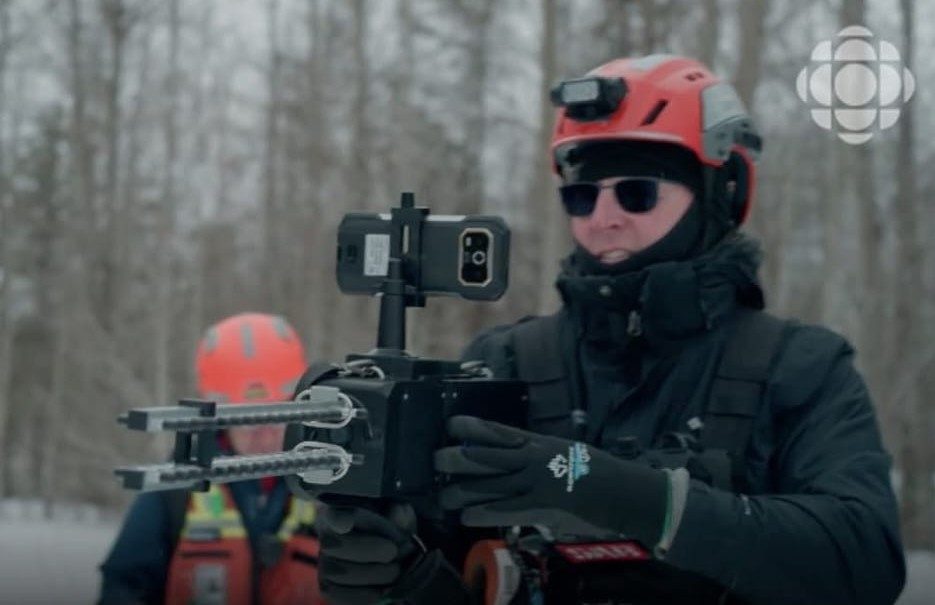
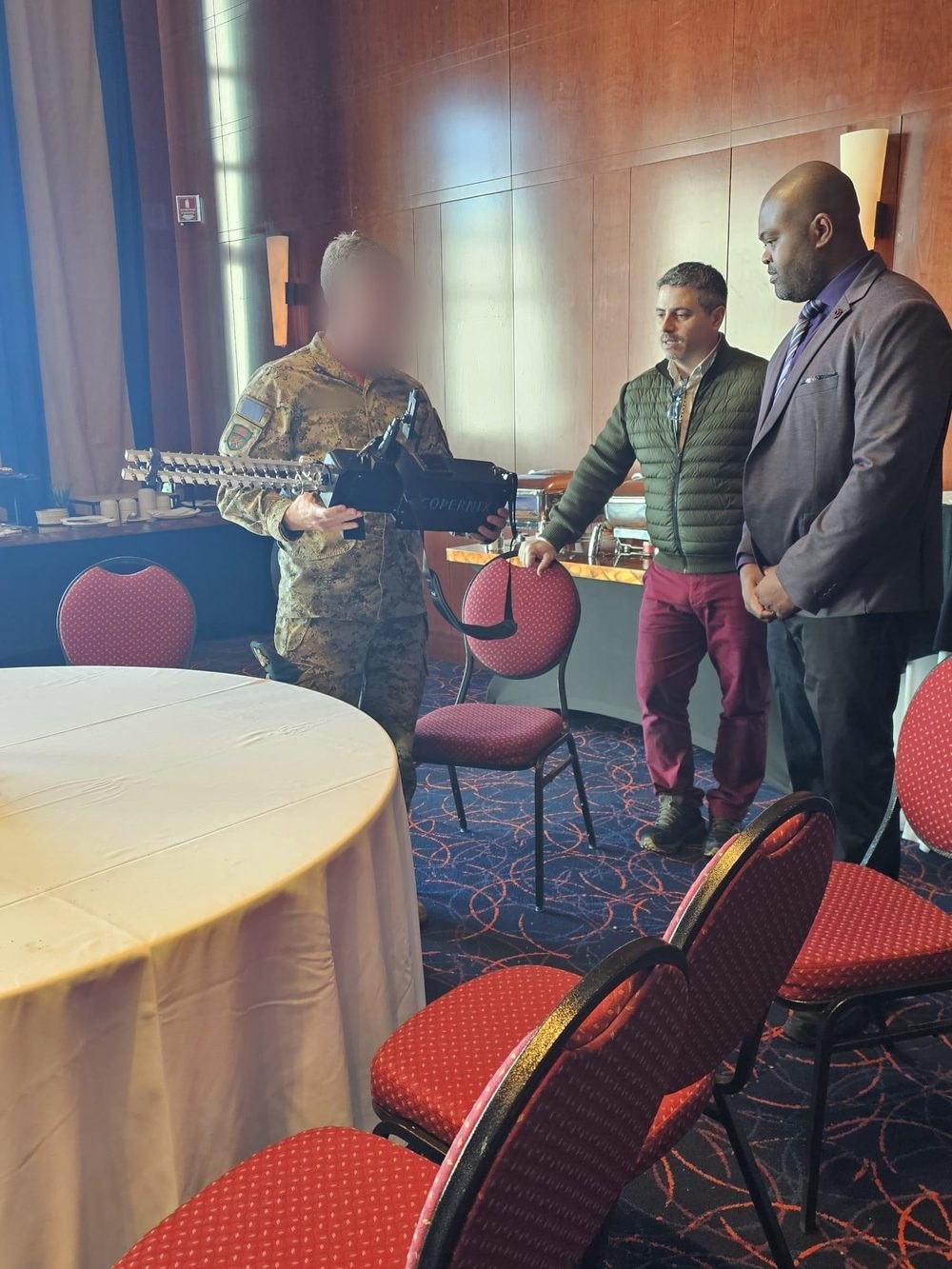
Handheld field unit. Two antennas resolve one directional bearing. In use with SUMI teams in Matawinie and AQBRS in Estrie.
Product page → Operator training → Try the screen simulator →Copernix · Passive RF signal intelligence
Copernix designs signal-intelligence systems, SIGINT and COMINT, that detect, identify and locate radio emitters from 1 MHz to 6 GHz without ever pinging their target. Designed in Québec, our technology is already in service with search and rescue teams.
New protocol decoders install by over-the-air update, so units already in the field keep gaining capabilities.
Phones, AirTags, hearing aids, some pacemakers, drone links: if it transmits between 1 MHz and 6 GHz, we can hear it. Search and rescue, abducted children, pipelines and restricted sites, contraband phones in prisons, incoming drones: the sky’s the limit.
Our systems listen. They never ping, jam or interrogate a target.
Our expertise
We build the whole chain: the receivers, the signal processing and the AI that makes sense of what they hear. Four disciplines come together in one engine, Vestarax.
Detect and characterize radio emitters from 1 MHz to 6 GHz: phones, handheld radios, drone control links, distress beacons and RF triggers. Receive-only, so the listener stays silent.
Decode the protocols devices speak, Wi-Fi and Bluetooth Low Energy today with more coming, to tell exactly which device is transmitting among dozens.
Directional antennas resolve a bearing on the source: a heading a team can walk, drive or fly, drawn on the map and logged.
Orion, our own AI, learns the radio background of a place so that a new signal stands out, and AI-assisted classification sorts targets from clutter.
Why Copernix
Orion learns the well-established signals around a search, responders’ phones and watches included, and sets them aside. Teams keep their technology, and the victim’s signal still stands out.
Meet Orion →Our field tests follow blind protocol PVT-002: targets placed without our knowledge, an independent witness on site, and every miss written into the report.
Liberandum units are in service with the SUMI teams of the MRC de Matawinie and with AQBRS in Estrie.
Field record →The same Vestarax engine runs handheld and in aerial pods validated in flight, with fixed Sentinel stations coming. It needs no cell tower, satellite or internet.
Upcoming products →A complete operator course, and a screen simulator that runs the real Liberandum software, in French and English.
Operator training →Designed in Québec, with a Liberandum certified to ISED RSS-247. Software, manuals and licences come in both official languages.
Field record · Matawinie, QC
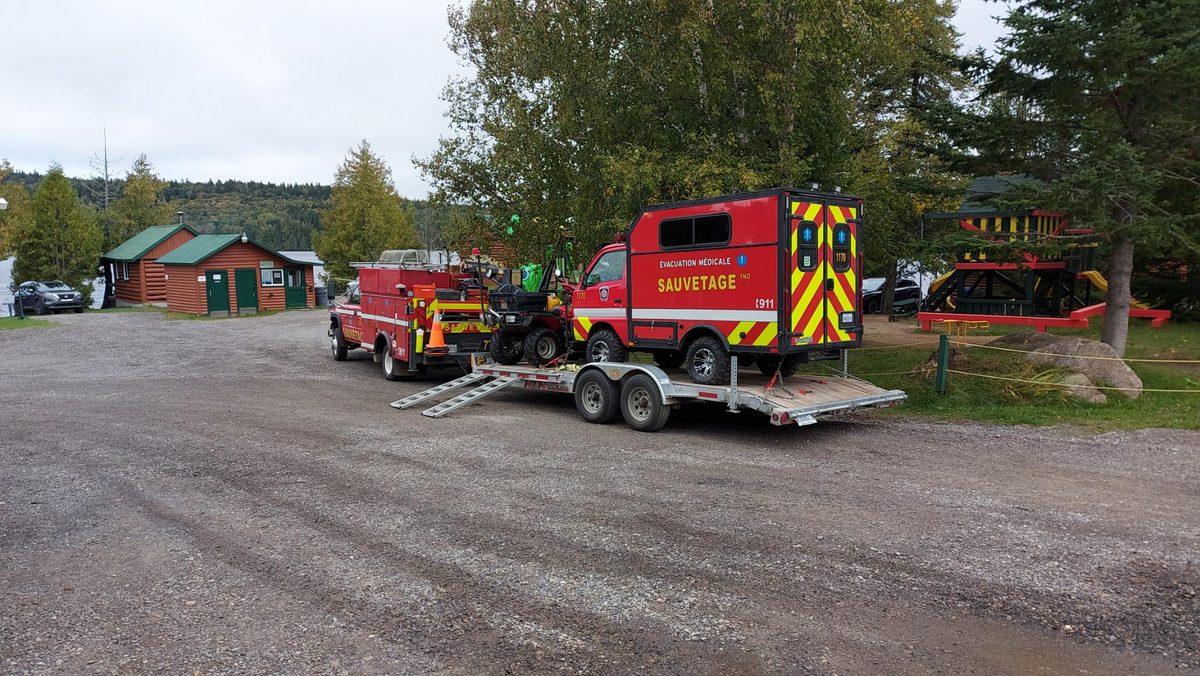
The search for Zachary Drouin ran 52 hours. With the fire department, we ran it again as a simulation: the same search, starting from the information the Sûreté du Québec (SQ) had given the fire department at the time. Two operators with a Liberandum found the device in about 5 hours, with no helicopter. MRC de Matawinie Prefect Isabelle Perreault described the result on Nous TV Laurentides.
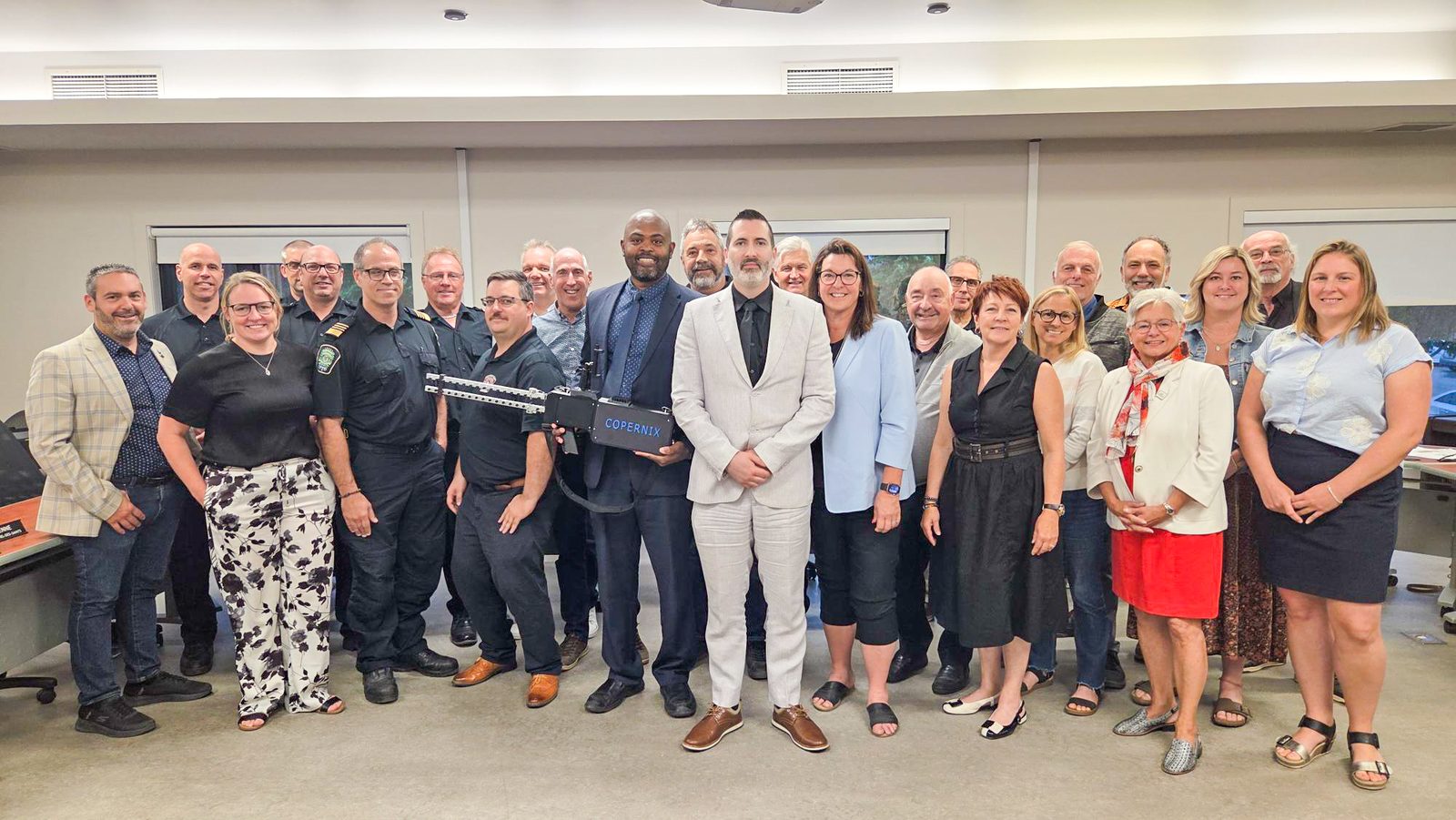
On June 17, 2026, Copernix delivered a Liberandum to the SUMI (service d'urgence en milieu isolé) teams of Saint-Côme, Saint-Donat, Sainte-Béatrix and Saint-Michel-des-Saints, a specialized unit within the fire department. A second unit is deployed with AQBRS in Estrie.
One engine · four ways to deploy it
The engine inside the Liberandum also runs under a wing, on a mast and in an app. Customers license the software with the hardware; Copernix keeps the engine sealed.
Handheld field unit. Two antennas resolve one directional bearing. In use with SUMI teams in Matawinie and AQBRS in Estrie.
Product page → Operator training → Try the screen simulator →Vestarax in a Cessna fixed-wing pod or a drone pod under 10 lb, built with Eagle-pods. Airborne validation completed Q3 2026.
Full 3D viewer and drawing →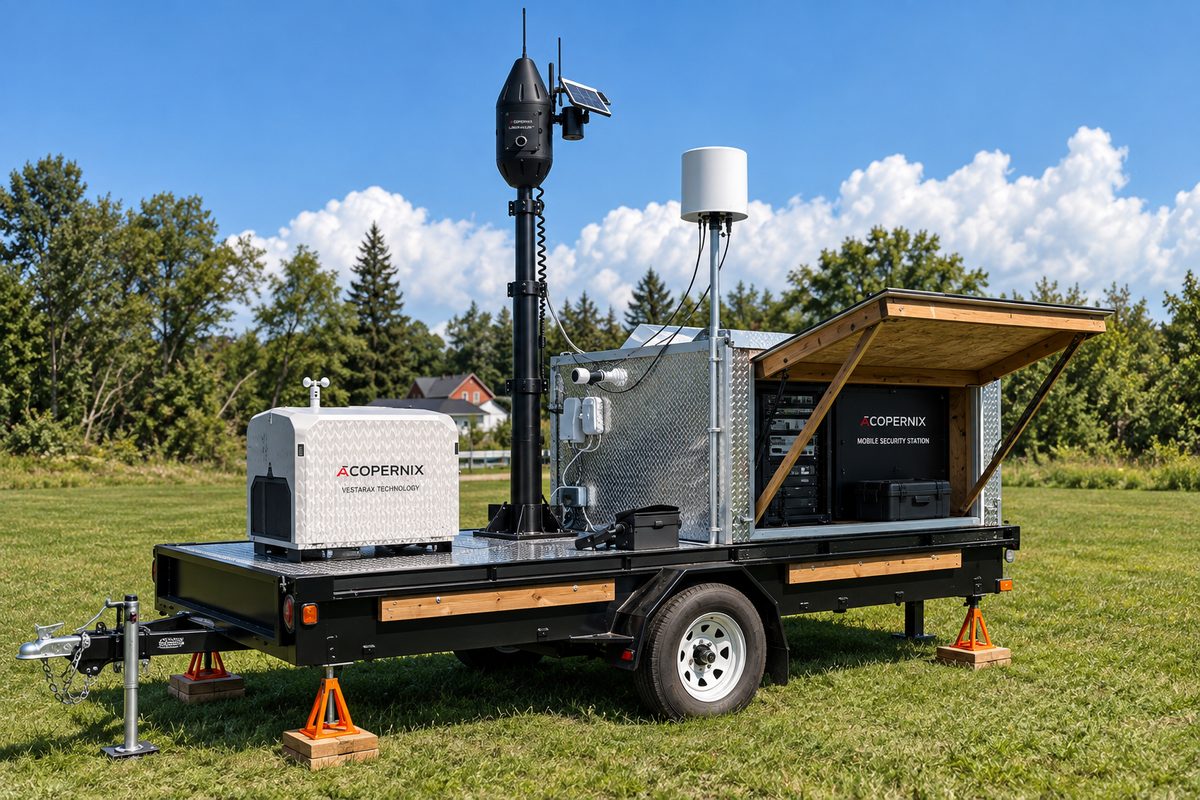 CONCEPT RENDER
Permanent stations and deployable mobile units for utilities, railways, mines and protected areas. Logs drone and Remote ID activity around a site.
Product page → SCAN FOR THE FREE APP ON iOS OR ANDROID
Once the team finds the device, the Premium App will confirm whose it is: breadcrumb trail from the Last Known Point, direction check, positive ID and two-way messaging. A free version of the Copernix app is already available on iOS and Android.
Product page →SUMI units, volunteer SAR teams, police SAR coordinators. Find the device first, then the person carrying it.
Police, fire and border agencies. Indigenous public-safety organizations through Algonquin Supply Canada.
Utilities, railways, mines, ports. Drone awareness and a logged history of Remote ID traffic for FAA UAFR compliance.
ISR, COMINT and SIGINT support. Electronic-trigger detection for EOD and counter-IED units: RF-triggered devices only.
In the field
 VIDEO · YOUTUBECopernix Vestarax | SAR Geolocation. Sans GPS. Sans réseau. Opérationnel.
Roadmap
Multi-protocol extension that resolves trajectory: is the drone coming toward the site or leaving?
Fixed and mobile stations for sites that need a record of RF and drone activity, day and night.
Responders reach the person carrying the device through the Premium App.
About Copernix
Founded in Sherbrooke in 2023 by Charles-Ugo Brouillard, who writes the detection algorithms, and Gregory Cazir, who came to RF from nursing. Searches run long when a team can't tell which way to walk. We build the tool that tells them.
Vestarax finds an emitter by listening to it. It doesn't ping, jam or interrogate the device.
We publish about 120 m in deep woods next to 2.5 km in the open, so teams plan with real numbers.
Protocol PVT-002: blind target placement, a witness on site, non-detections disclosed in the report.
Software, training manual and licence in French and English.
Paid field trial
Paid field trials. Two Copernix staff come to your terrain, train your team and run a blind test. Travel is quoted as a fixed package.